General Cell Lines and Cell Cultures


Cell Biologics ZDF Rat Diabetic Colonic Microvascular Endothelial Cells
ZDF Rat Diabetic Colonic Microvascular Endothelial Cells

Cell Biologics Immortalized RFP-Expressing Rat Primary Corneal Epithelial Cells
Immortalized RFP-Expressing Rat Primary Corneal Epithelial Cells
Cell Biologics Immortalized Porcine Primary Aortic Smooth Muscle Cells
Immortalized Porcine Primary Aortic Smooth Muscle Cells

Cell Applications Inc Proliferating Aortic Endothelial Cells (HAOEC), Adult
Proliferating Aortic Endothelial Cells (HAOEC), Adult


Cell Applications Inc Proliferating Cardiac Fibroblasts (HCF), Fetal
Proliferating Cardiac Fibroblasts (HCF), Fetal

Biochain Institute Inc Frozen Tissue Section - Human Diabetic Diseased Tissue: Kidney, 5 slides/PK
BioChain's tissue products are based on the sample repository network established following the IRB-approved ethical standard and procedures. BioChain's Frozen Tissue Slides are ideal for rapidly identifying cellular localization of RNA or protein. A single human adult normal tissue with 5-10 um thickness is mounted on a positively charged glass slide. The slides are fixed and dehydrated with acetone for consistent results with in situ hybridization and immunohistochemistry. More organs may be available upon request.

ATCC Quantitative Genomic; DNA from; Mycoplasma hominis; Strain: PG21
Quantitative genomic DNA from Mycoplasma hominis strain PG21 (ATCC 23114). This whole-genome sequenced product can be used for assay development, verification, and validation as well as monitoring of day-to-day test variation and lot-to-lot performance of molecular-based assays. The quantitative format allows the generation of a standard curve for quantitative PCR (qPCR) to determine bacterial load.
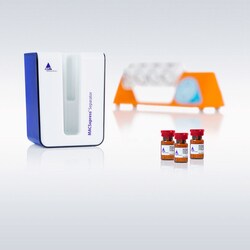
Miltenyi Biotec, Inc. MACSxpress LRSC Starting Kit
With MACSxpress Technology, untouched human leukocyte subsets can be isolated from whole blood, buffy coats, and LRSCs (buffy cones) without density gradient centrifugation. The MACSxpress Separator enables cell isolation from up to 30 mL of sample in a single step and can be used with 5, 15, or 50 mL tubes. The MACSxpress Starting Kits contain a MACSxpress Separator, a MACSmix™ Tube Rotator, and a MACSxpress Isolation Kit free of choice; starting up has never been easier. Kit containing MACS Equipment and Reagent for magnetic cell separation directly from LRSC using MACSxpress Beads

ATCC HL-60; Promyelocytic Leukemia; Human (Homo sapiens)
HL-60 cells are promyeoloblasts isolated from the peripheral blood by leukopheresis from a 36-year-old,White, female with acute promyelocytic leukemia. This cell line can be used in immune disorder and immunology research.
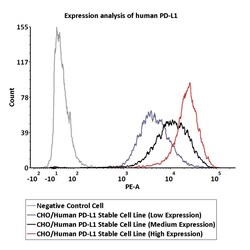
ACROBiosystems CHO/Human PD-L1 Stable Cell Line (High Expression) Development Service
Programmed cell death 1 ligand 1 (PDL1) is also known as B7-H, B7H1, MGC142294, MGC142296, PD-L1, PDCD1L1 and PDCD1LG1,which is a member of the growing B7 family of immune molecules and is involved in the regulation of cellular and humoral immune responses.PDL1 is a cell surface immunoglobulin superfamily with two Ig-like domains within the extracellular region and a short cytoplasmic domain. This protein is broadly expressed in the majority of peripheral tissues as well as hematopoietic cells. Interaction between PDL1 and its receptors belonging to the CD28 family of molecules provide both stimulatory and inhibitory signals in regulating T cell activation and tolerance. PDL1 may inhibit ongoing T-cell responses by inducing apoptosis and arresting cell-cycle progression.

Biochain Institute Inc Frozen Tissue Section - Dementia: Brain: Frontal Lobe, 5 slides/PK
BioChain's tissue products are based on the sample repository network established following the IRB-approved ethical standard and procedures. BioChain's Frozen Tissue Slides are ideal for rapidly identifying cellular localization of RNA or protein. A single human adult normal tissue with 5-10 um thickness is mounted on a positively charged glass slide. The slides are fixed and dehydrated with acetone for consistent results with in situ hybridization and immunohistochemistry. More organs may be available upon request.

ATCC NCI-H2023; Lung Carcinoma; Human (Homo sapiens)
NCI-H2023 [H2023] is a cell line that was isolated from the lungs of a 26-year-old, White, male patient with stage 3A non-small cell lung cancer: adenocarcinoma. This product has applications in cancer research.
Eurofins Discoverx Ready-to-Assay Ghrelin Receptor Frozen Cells, 2 Vials of Cells. (HTS187RTA)
The Ready-to-Assay Ghrelin Receptor Frozen Cells are a simple, thaw-and-assay cell format for use in studying drug candidates (small molecules or biologics) targeting GPCRs. This assay assesses ligand (e.g. ghrelin) based activation of GHSR GPCR activity via detection of increasing levels of intracellular calcium. The included cell line overexpresses GHSR alongside endogenous high levels of a promiscuous G-protein, coupling the receptor to the calcium signaling pathway. Upon activation of GHSR, the resulting calcium activity can be fluorescently assayed. Ready-to-assay kits consist of two vials of the stably modified clonal cell line in a convenient thaw-and-use format. For detailed product information, User manual and datasheet, visit www.discoverx.com/products-applications/frozen-cells.

ATCC Streptococcus pyogenes
Streptococcus pyogenes strain QC A62 is a whole-genome sequenced bacterium that was isolated from a human throat culture. This culture is typed as Lancefield’s group A and it can be used in emerging infectious disease research and as a quality control strain for BBL products.